Welcome to our ancestral farm house in the lovely village of
Erumaipetti, the beautiful native village of ours, which nestles picturesque farmlands of hard working farmers, located in the prosperous valley of
Kolli hills of
Tamil Nadu,
South India.
I am here in this post to feature about
Pongal, the Tamil Festival, which was celebrated traditionally, as always, in this ancestral home of our native village.
If you are interested to know more about the exact geographical location of this rural place, it’s here, here and here.The rice, sugarcane and pulses, harvested in the Tamil month of 'Thai'(the period of Jan 15th-Feb 15th) as per the Tamil calendar, is cooked traditionally in bronze pots in the backyards of the farmers' houses, as an offering to ‘
Sun God’, a way of thanking nature for the bestowal of prosperity.
The food prepared is also named after the festival,
Pongal.
The main meal prepared consists of two;
Sarkkarai Pongal; Rice harvested fresh from the farm land, cooked with
Pasi parippu(
moong dal) and
Vellam(jaggery/molasses) for the sweetness, flavoured with cardamom. Any Indian festival is associated with a sweet dish.:)
and
Pal Pongal; Rice cooked soft in fresh milk, from one’s own cattle or the dairy farm, with
pasi paruppu.Before we get into the thick of things, I would love to take you for a quick tour around the Bungalow :)
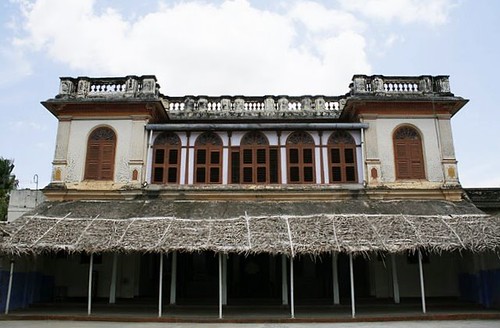
The Front yard of our Mighty 100 year old Ancestral Farm house.
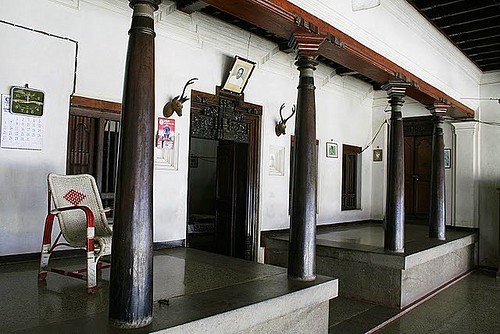
As you step in...

The Entrance..
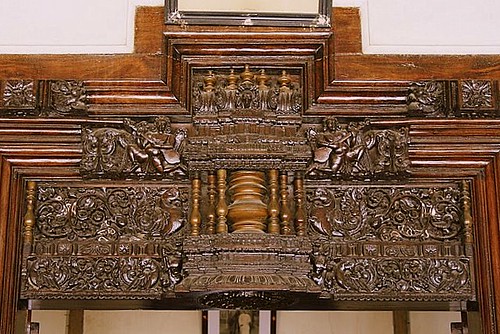
The Old fashioned carvings on the teak wood, you see above the door.
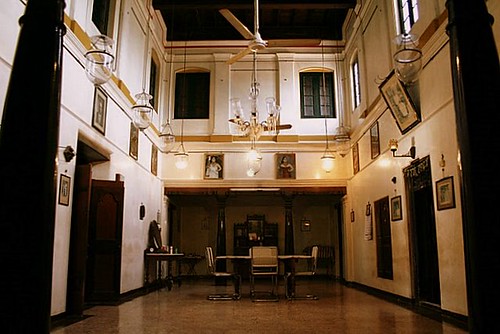
The 'Living'.

The place where the family used to serve food for a larger crowd, in olden days. At the farther end you can see dents on the walls on either sides of the door, where oil lamps were placed for light, when they had no luxury of electricity.The place is obviously not in use at present.
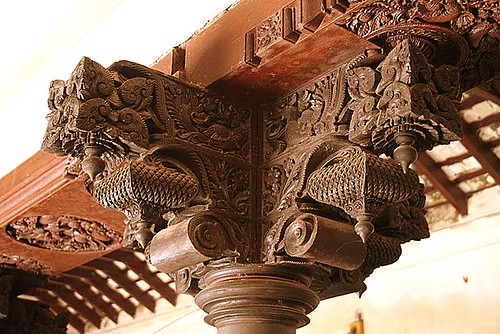
The intricate wood work on pillars.

The 19th Century English Chandeliers and Furniture adorn the formal drawing room, created during the British reign in India.

The
Kolli Hills and the village as seen from the roof.
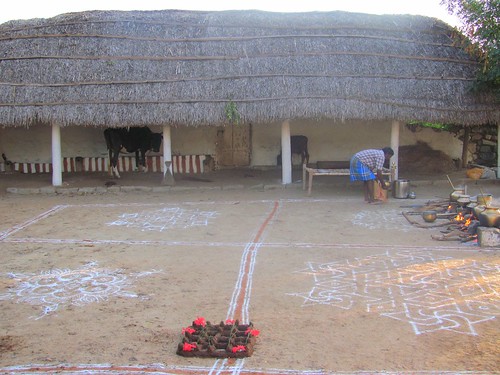
So, I am back for now, to the backyard, where the Pongal preparations have already started.Subramani, a great helper of ours, in the farmland assists us for the festival, every year.
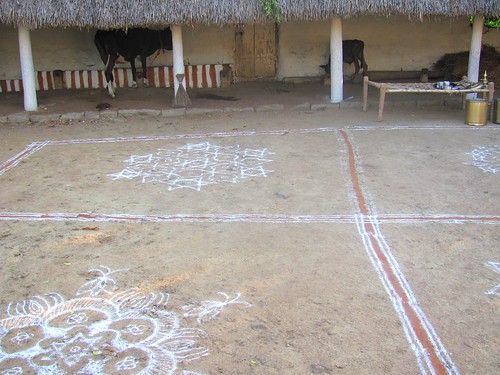
A Majority of the cows were shifted to the farm the previous day and the cattle shed holds just Laxmi and her calf...if your eyes are more towards those patterns on the ground...

..I am here to explain...it's a
Kolam.
Know more about the
Kolam,
here.
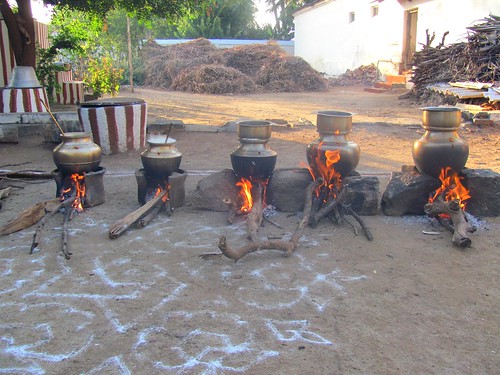
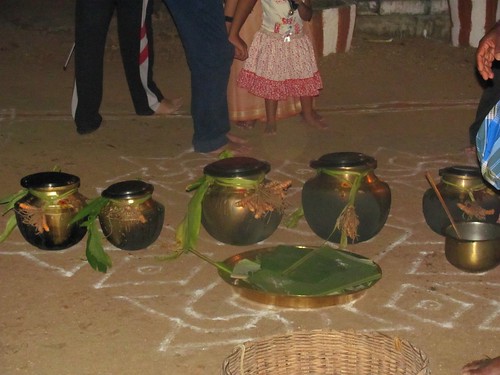
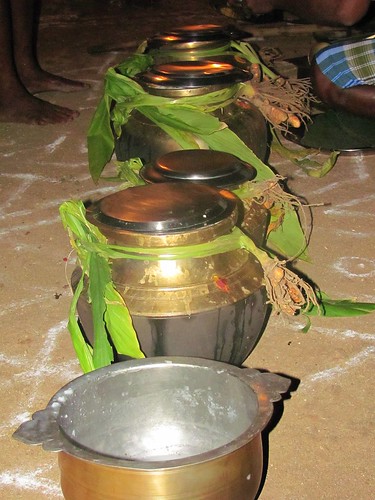
The pots with
Pal Pongal and
Sakkarai Pongal are lined up.
Generally a pot of each is prepared per house. Since we are a big family, we need 5 pots, each year ;)..3 pots of
Pal Pongal and 2 of
Sweet Pongal..
The firewood used, is again from the farms.
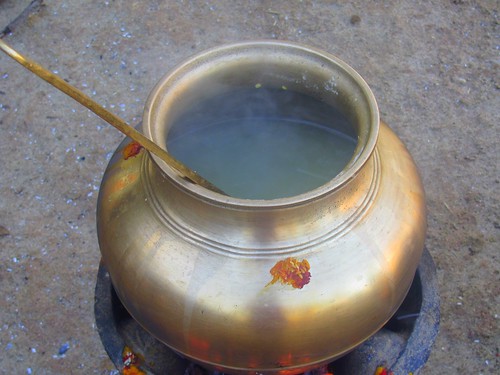
The first pan set, on the stove with Milk, Molasses and the
Dal, to boil..
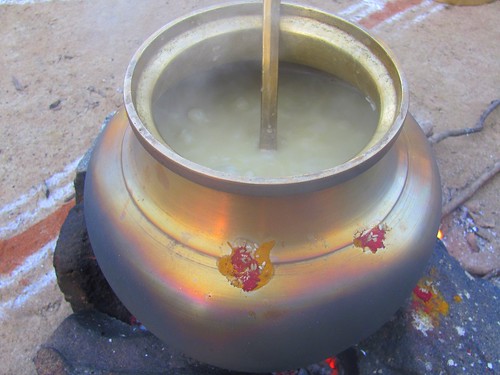
and now after the addition of Rice, the sweet
Sakkarai Pongal gets cooked...
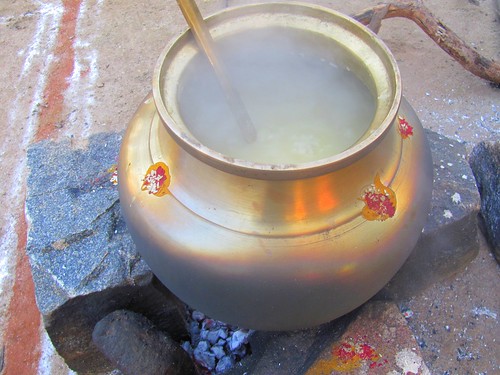
..with more firewood for a better flame.

Almost in its final stage.The stove is put off to regulate the heat since the heat of the Bronze pan facilitates the rest of the cooking, imparting that natural flavour to the
Pongal..
Here's how to make
Sakkarai Pongal, the traditional way-
Sakkarai PongalNewly harvested Raw rice - 2 cups
Jaggery- 500gms/2 balls/4 cups after grating
Pasi paruppu/moong dal- roasted lightly- 1/2 cup
Thick milk-3 cups
Fresh coconut gratings- 1/2 cup
A few cashew nuts and raisins fried separately in ghee(clarified butter)
Ghee/Clarified butter-2 tbsps(you can use this to fry the above two)
Cardamom powder- to flavour
Fill 3/4th level of the bronze pot with water with a little milk added to it. Place the pot on stove.When the water boils, stir in the moong dal.The water boils over due to the milk and dal in the pot and when it reaches the brink, and bubbles over, the family gathers round to shout 'Pongalo Pongal!', the loud cheer marking the festivity of 'Celebrating the Prosperity'!
Now, the water level has to be brought down to half the level, by transferring half of it to another vessel.When the dal in the pot is half cooked, add the washed raw rice.Keep stirring to facilitate even cooking.When cooked soft, add the grated/powdered jaggery, stirring all the while. Add a pinch of sea salt.Check the consistency at this stage and add milk little by little as it tends to boil over, again stirring continously.Add the transferred hot water if necessary.Stir in grated coconut, ghee( in which the cashews and raisins were fried) and cardamom powder when the
Pongal in the pot is blended and cooked soft and mushy.Remove from fire and garnish with fried cashew nuts and raisins. Place for
Pooja or the 'Prayer'.'Taste testing' the food is not done as the pot has to be placed for
Neivedyam/Pallayam, an offering to God.

The
Kanji Thotti is prepared simultaneously for
Pooja.
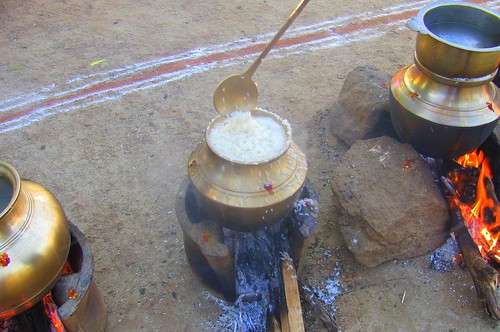
Now it's the turn for
Pal Pongal, which is being mashed up with a heavy bronze ladle all the while getting cooked.
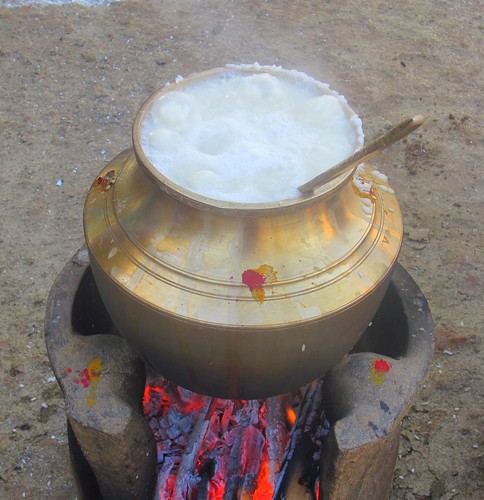
This is when we shout
Pongalo Pongal! (meaning,
may we welcome the prosperity!)right at that moment when the milk in the pot boils over! :)
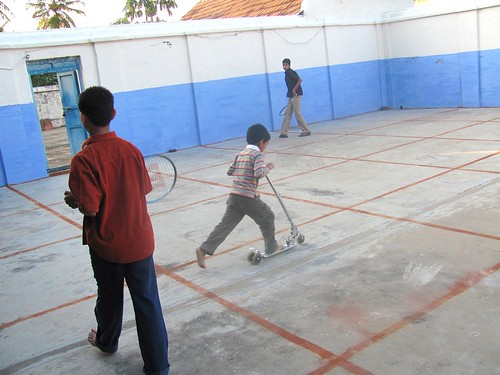
While the kids are having their time in the front yard..
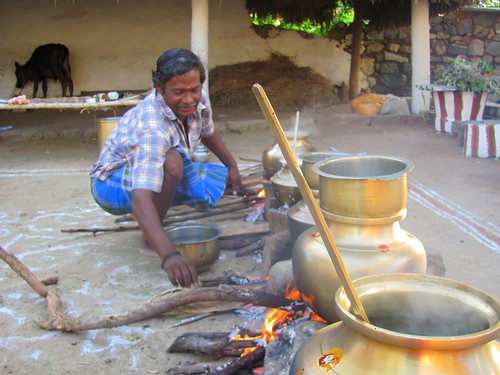
Subramani is busy with his work...
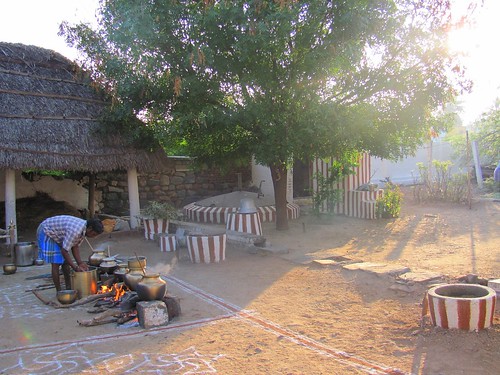
..a much conscious cook as he speeds up his work calculating the time with the golden rays of the setting sun..
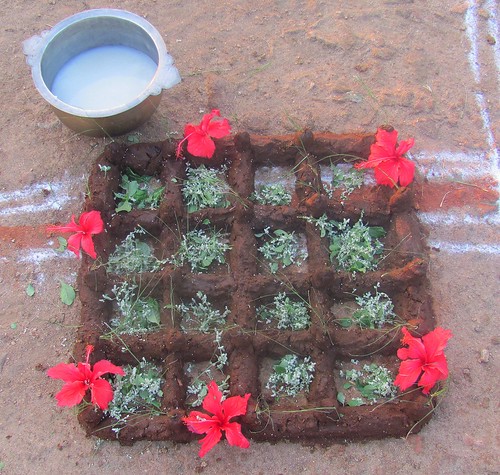 Tulsi
Tulsi (basil leaves) and
Poolai poo goes in the squares and stalks of grass inserted on the walls.The milk has to wait, till the
Pooja starts.

The Sun is further down..
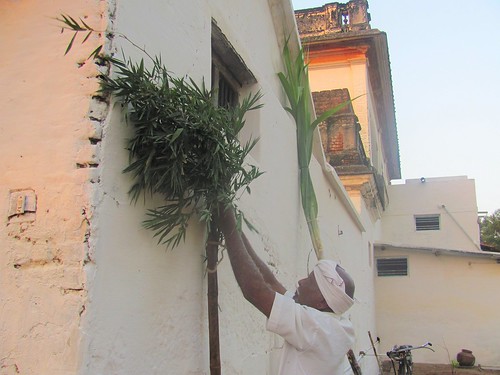
and Veeran..
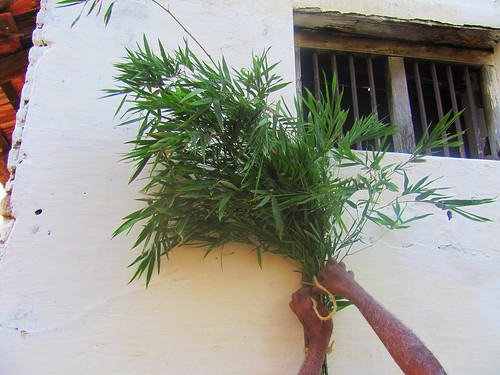
sets up the
Thoranam with a bunch of bamboo leaves on one end, to start with..

..and yeah..let me introduce Rajathi to you guys; the retired farmer maid, who was eager to see the family gathering.She's a typical old village woman in her brand new
colourful
Pongal Saree..:)
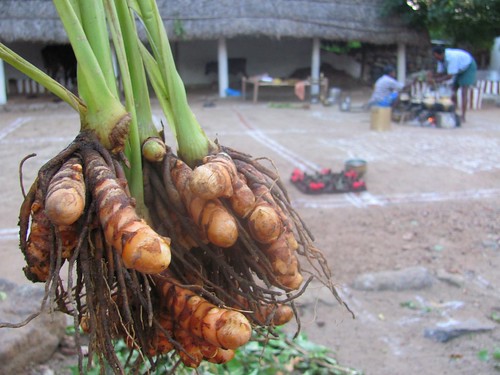
...back to Veeran who prepares the Decorative Line
or the Thoranam.What you see here is fresh turmeric, again, pulled out from the farm, a 'must to be used ingredient' for the
Thoranam, hung out on either ends.
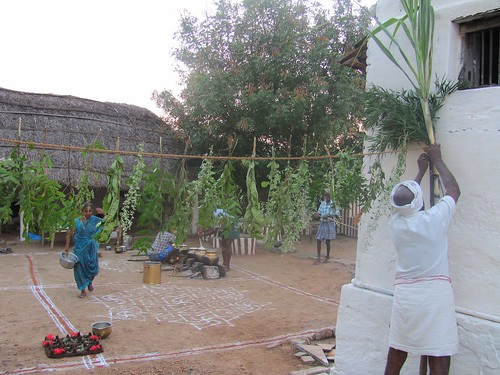
Mango and Neem leaves are alternated with
Poolai poo to set the
thoranam with harvested Sugar Canes on either sides making the Line complete...
...hearing the loud sound of the beating drums, I couldn't help rushing to the front yard..:)...
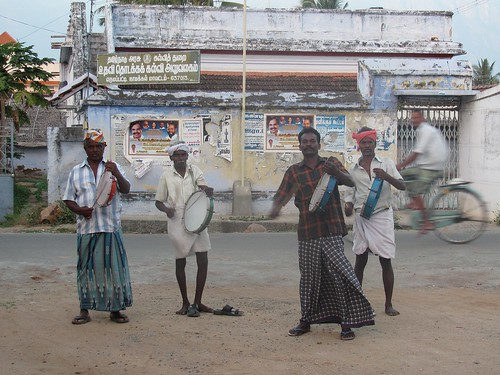
..to confront the men representing the temple informing the house to get their cows ready..

and Laxmi hears them right!!..:)
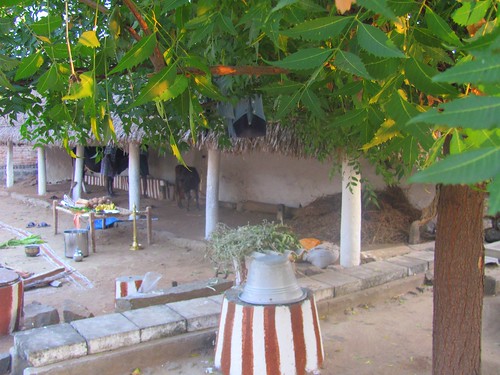
Natesan and Veeran are already off to get her ready..

while Subramani is assisted by Veeramalai to attend to the pots.

and the hot hot
Pal Pongal is finally ready
Here's Traditional Recipe for
Pal Pongal..
Newly harvested Raw Rice-1 cup
Fresh Milk- 6 cups
Water-1 cup
Moong dal- a tsp
Salt-to taste
Wash rice, drain and keep aside. Mix milk and water together in a vessel, which would yield 7 cups. Transfer half the quantity to the bronze pot and bring to a boil. Add rice and and stir well.Minimise the flame to medium as the milk boils over the pot.To bring down the flame, a piece or two of wood is pulled out if cooked in a firewood stove as you see here.When the rice gets cooked and absorbs the liquid content, pour the remaining milk little by little, stirring all the while. A heavy bottomed utensil like a bronze pot is a must as the Pongal tends to stick to the base at this stage.Keep stirring with a bronze ladle until the rice is cooked and turns creamy and soft. Remove from fire. Place for
Pooja.
Pongal tends to attain a harder consistency while cooling down.
The men are seen still busy chatting while the women of the family get ready for the
Pooja...Oops... I'm in!.. I'm in!...:)
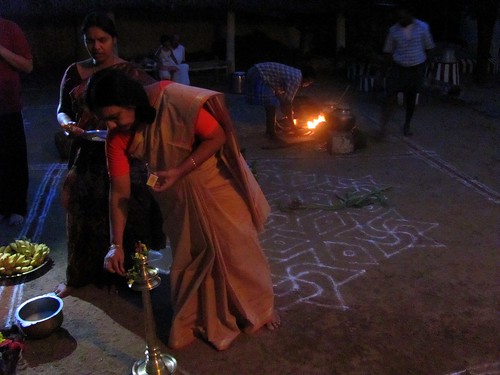
The Lady of the house, my mom-in-law, lights the lamp to announce the start of the
Pooja.
so as to invite the families to assemble.
Subramani transfers a little of the
Pongals for
Neivedyam from the lined up Pots ready for the
Pooja.

The fully decorated
Thotti.
Pal Pongal and Milk are in the pits, finished off with
Kadambam(a variety of colourful flowers on a string used for
Pooja).
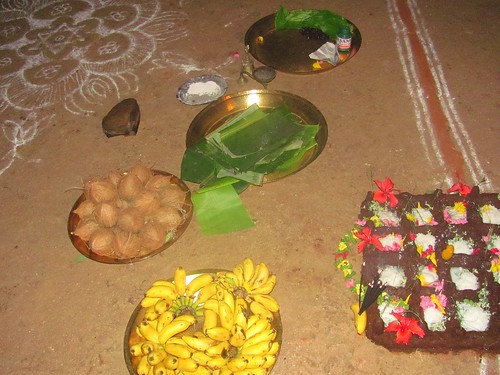
Coconuts and bananas play an important role here.
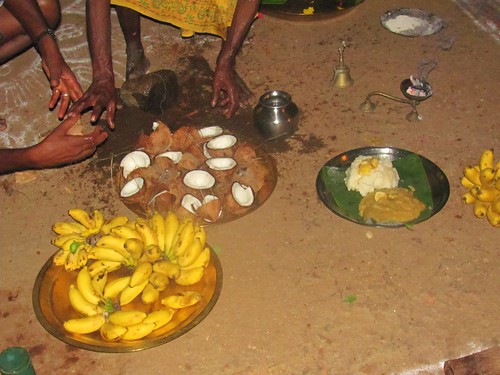
Coconuts are broken to halves and the water collected in a
sombhu for
Theertham, set aside the
Pongal Pallayam; the two small heaps of both the Pongals with dents in the middle filled with fresh ghee, bits of jaggery and banana.
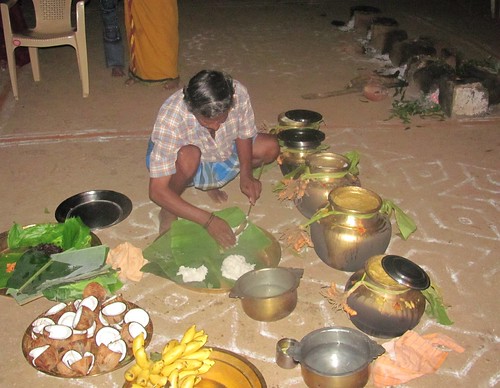
Next he takes out the samples from the rest of the pots ..
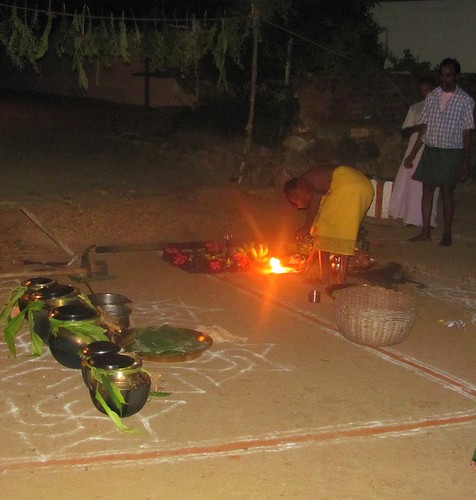
and the Pooja is performed.
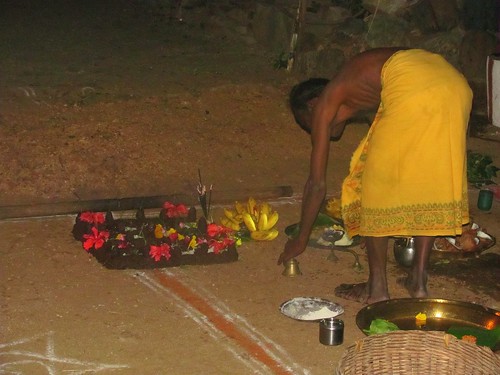
The person who performs the Pooja is called a
Pandaram or the Village Priest.

The neivedyam is offered to the cows after the Pooja, as they are considered sacred.
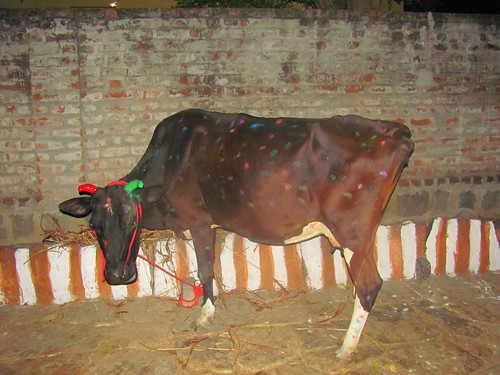
Laxmi with her painted horns and coloured skin awaits eagerly, while
 Pandaram
 followed by the farmers, head to the cattle shed...

to feed Laxmi, the
Pongal Pallayam, which has already been offered to God
.As soon she licks it off, clean..
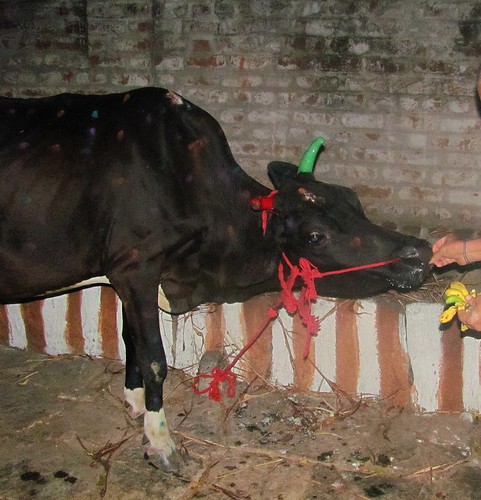
..my dad in law, the master of the house, offers her favourite food; Bananas :)
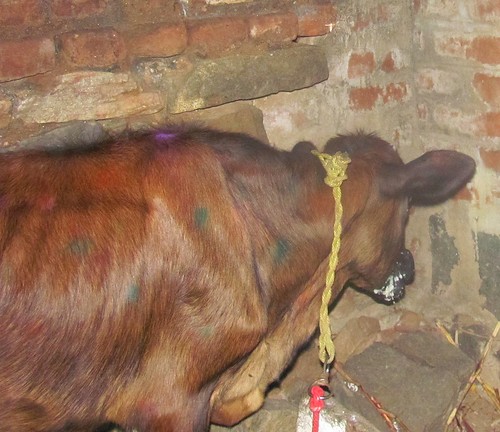
Her calf is taken care of, next...:)
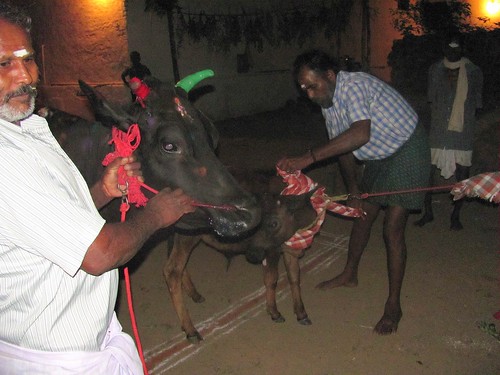
Towels are wrapped around the necks of the cow n calf
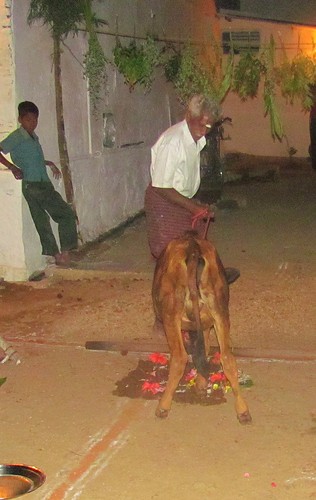
and are made to stamp past the decorated
Thotti.The cows are led to the temple by the farmers.
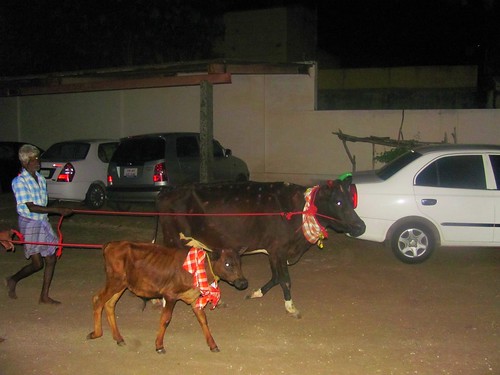
The cows get back from the temple..

and the food is served to the men first on fresh green plantain leaves!
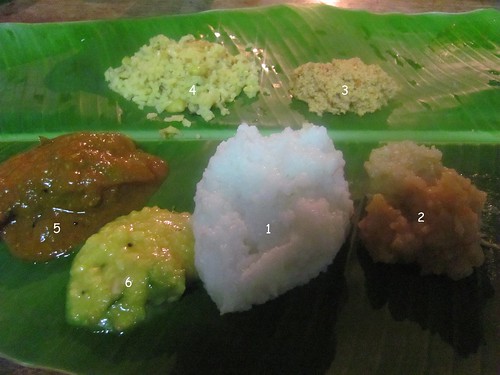
The food on the leaf.(The chandelier was kept 'dim' and hence the poor lighting here)
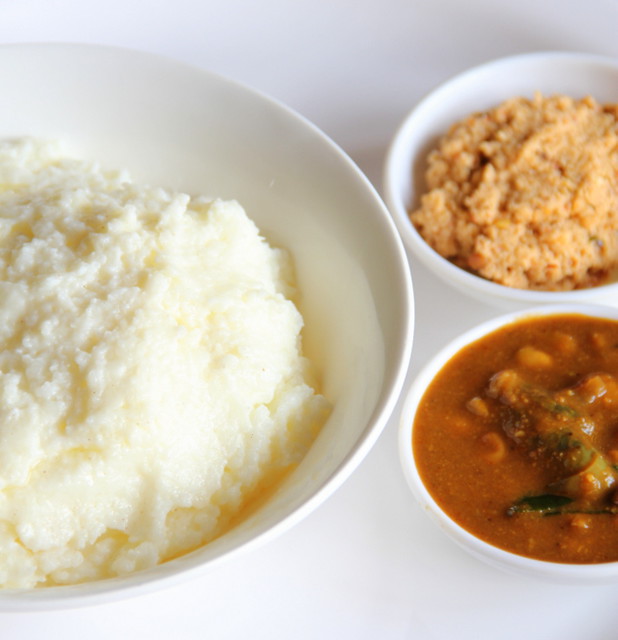
1. Pal Pongal (scroll up for recipe above)
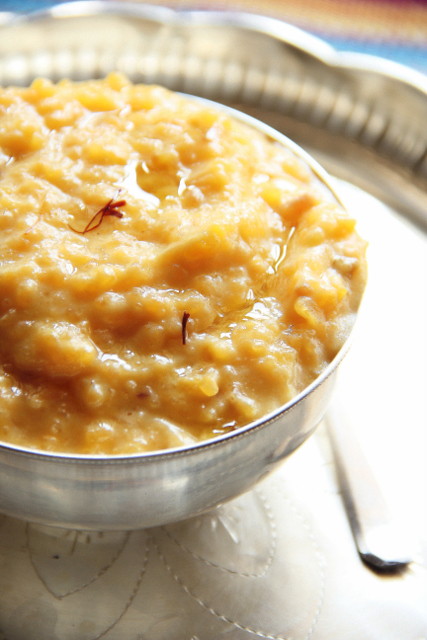
2. Sakkarai Pongal (scroll up for recipe above)
and the accompaniments,
3. Thengai Thuvaiyal
4. Mochai sadam(nothing to do with Pongal; was served as one my aunts made that for us).
Find the recipe
here.
5. Ennai Kathrikkai Kuzhambu/Tangy Eggplant Curry
6. Pasiparuppu/Tempered dal
The recipes of the other accompaniments will be posted soon.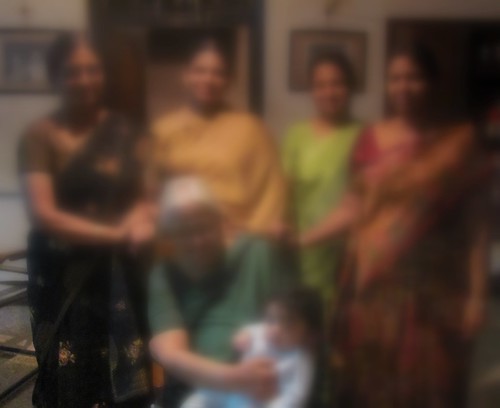
The Dessert Section ;) ..
Sorry for the intentionally blurred pic, folks :)The eldest member, Aunt Indira holding the youngest, the 6 month old Ashwath :)!
If I had not mentioned earlier, it was a lovely Thanksgiving dinner that gathered all the four generations of the family.
A Few Afternotes from the BloggerI just can't explain in words how glad I am for being selected as one among the 24 participants for the month's event!
I feel extremely proud to have show cased the festival of our country to the world and I have absolutely no words to Thank the Great Foodbuzz Team which made this possible!
The Ancestral Bungalow which has witnessed over 100 Pongal celebrations has seen the last this year as my parents-in-law are moving to a compact house in the nearby town.
On another note, Laxmi, the cow died, the very next day after Pongal due to snake bite.She was trying to chew out hay from the hay stack when was bitten by the snake on her tongue.
Thank You for going through the long long post probably the longest, posted in mine, so far!
Hope you enjoyed the same!
Lots of Love,
Bharathy :)
 Home
Home
 Recipe Index
  Tamil Recipes
 Our Cooking Station
 About
About